

関連記事

クロマチン剪断:再現可能なChIPワークフローの構築方法
2026-09-16Shearing the chromatin is one of the most sensitive steps in a ChIP protocol. Fragments that are too large can lead to a decrease in resolution and to poor immunoprecipitation. Shearing of too high an intensity can lead to epitope, DNA–protein complex and recoverable material damage.
No single program will work for all of the samples. The chromatin response to ultrasonic energy is different with each cell type, fixation, starting material, and depending on the efficiency of the chromatin lysis and the volume of the sample. The entire preparation process should be controlled to obtain reliable results, rather than just changing the sonication time.
What is Shearing of Chromatin?
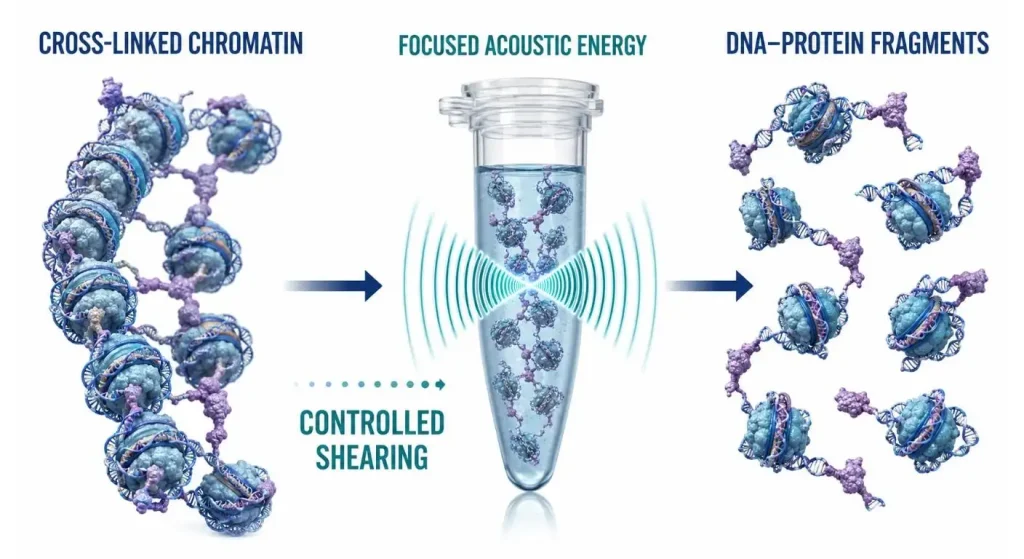
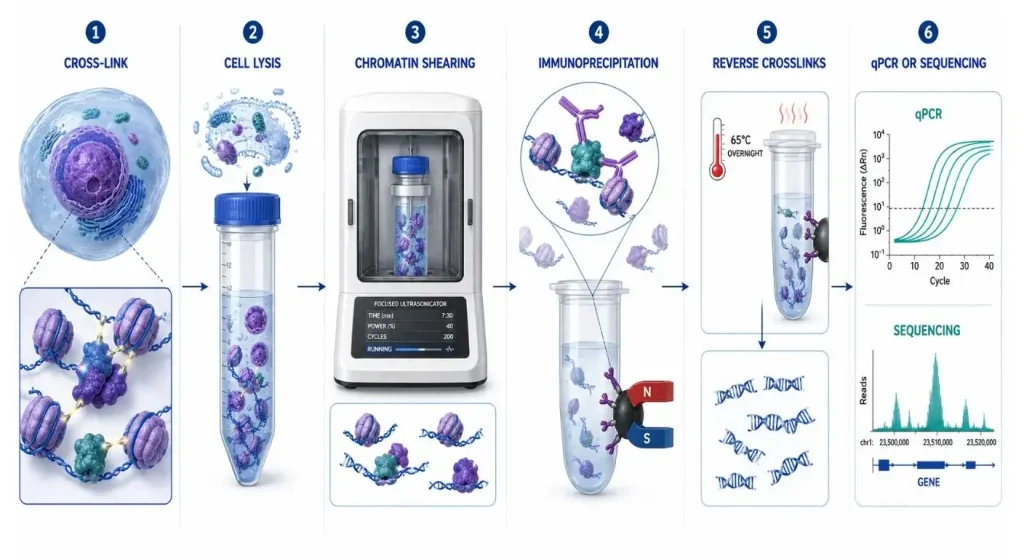
Before immunoprecipitation, shearing of the chromatin breaks the cross linked chromatin into smaller DNA – protein fragments. Antibodies can then be used to enrich chromatin that is associated with a particular transcription factor, histone or histone modification.
After immunoprecipitation, cross-links are reversed, DNA is purified, and enriched regions are analyzed by qPCR or sequencing.Longlight's ChIP-seq solutions provide assistance in the study of protein–DNA interactions and genome-wide regulatory sites.
Chromatin shearing differs from purified-DNA fragmentation because nucleosomes, associated proteins and formaldehyde cross-links alter DNA accessibility and mechanical properties.
Why is Fragment サイズ important?
Large fragments will diminish the positional resolution because the DNA that is recovered may be much longer than the protein binding site. They may also raise background when there are regions around them which are not specific but still physically connected.
Don't assume that very short pieces are necessarily better. An excessive amount of processing may lead to a loss of immunoprecipitation yield, loss of sensitive epitopes or to an inappropriate library profile.
The optimal fragment size will vary based on the ChIP protocol, biological target, antibody used and downstream analysis. Therefore, laboratories should establish an acceptable distribution for their own assay and not just a universal average size.
What about Shearing with Cross-Linking?
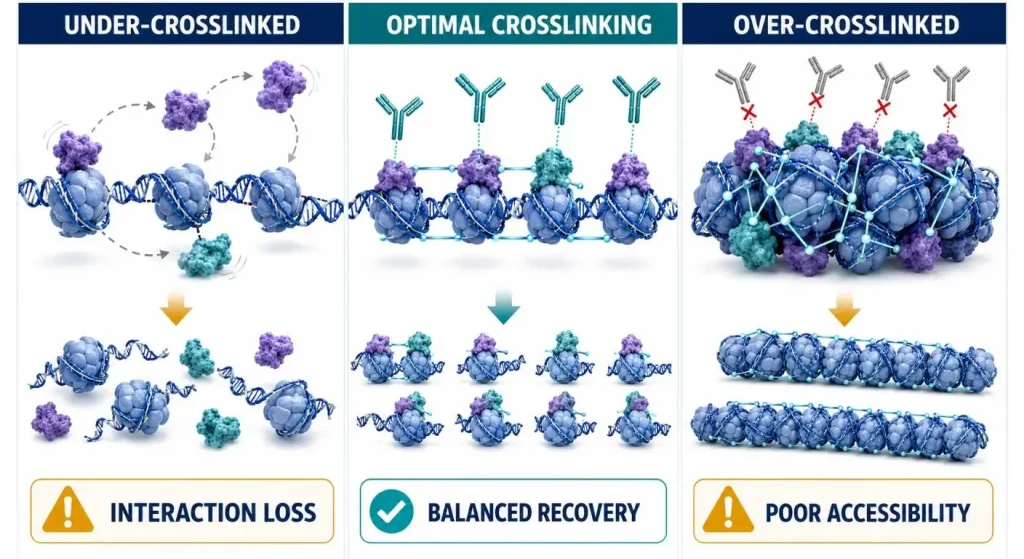
Crosslinking will maintain protein-DNA interaction while too intense cross-linking may make chromatin hard to fragment and may obscure antibody epitopes. Weak or transient interactions can be lost due to insufficient fixation.
Fixation time varies with the type of sample, concentration of the reagents, cell density and target protein. Quenching must also be uniform since the behavior of the samples will change upon further cross linking.
If the sample continues to resist shearing despite increasing the amount of acoustic energy, then this will not resolve the underlying issue. The cross linking and quenching conditions need to be considered before adopting a more aggressive program.
Why Cell Input および Lysis are Important?
An excess of cells in a small amount can create thick, sticky chromatin which shears irregularly. Too little starting material can increase handling losses and make it more difficult to assess chromatin quality.
Numbers of cells between experiments should be equalized. Tissue samples demand extra care since there is a high risk of obtaining a heterogeneous lysate due to extracellular material, structural differences and incomplete dissociation.
Before sonication, effective release of nuclei and chromatin is crucial. Incomplete lysis may result in the presence of unbroken nuclei or clumps of cells which are exposed to energy in a different way to the rest of the sample.
How Focused Ultrasonication Helps to Improve Control?
Probe sonicators are used where the energy is passed directly to the sample. Variability and contamination potential can result from probe position, immersion depth and technique of the operator.
Focused ultrasonication is used to direct acoustic energy, through a coupling medium, into a closed sample vessel. This results in a more controlled non-contact processing environment.
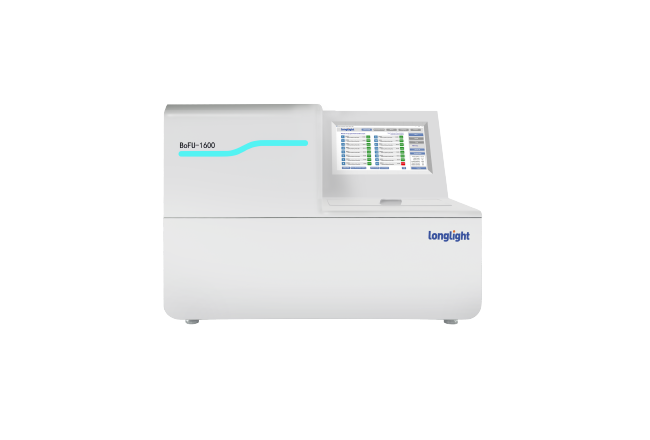
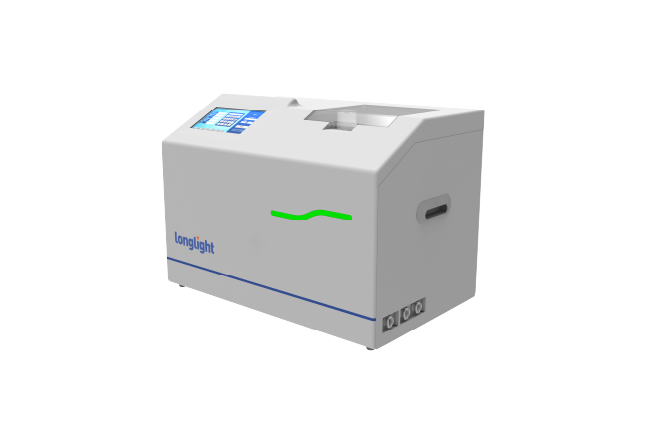
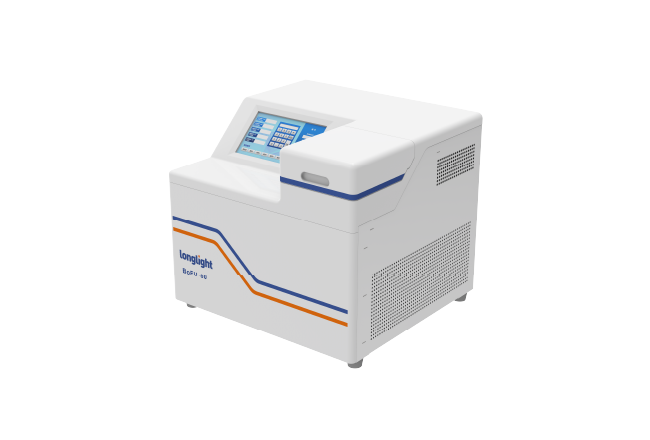
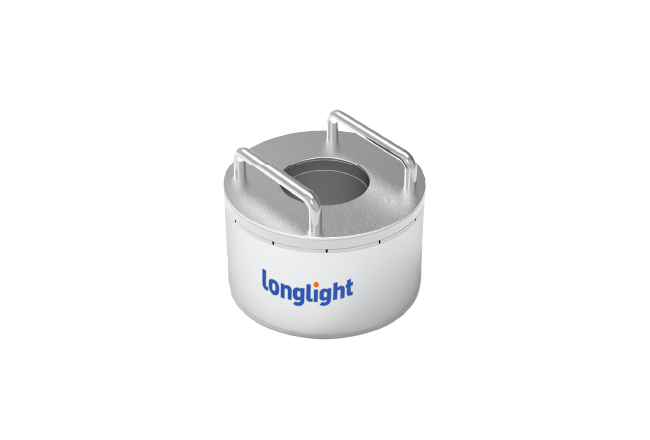
ザ BoFU-100 集光超音波計 provides temperature controlled DNA, RNA and chromatin shearing. The BoFU-1600 system offers the option for a multi-channel laboratory workflow when processing multiple samples.
What Parameters Are to be Optimized?
Acoustic intensity, duty cycle, treatment time, number of cycles, pause time, sample volume and sample temperature are important variables.
Change one major variable at a time during initial optimization.When intensity and duration and/or cell concentration are varied simultaneously, it can be hard to determine if the result was better or worse because of either change.
Test a small matrix of conditions around a reasonable starting point and compare fragment distributions and DNA recovery
- NOT the strongest treatment that results in the shortest DNA!
After selection of a program, save the program with the cell measurement input, buffer, tube and sample volume. Without these accompanying conditions, the sonication parameters cannot be reproduced reliably.
Why is it Important that Samples are to be kept Cool?
The ultrasonic treatment is accompanied by heating effects and chromatin may be sensitive to heat. Protein damage, loss of antibody recognition and increased variability can be a factor of heat.
The cooling throughout the entire run should be the same (even during the rest between runs). The speed of movement of tubes between an ice bucket and the instrument should not affect the sample temperature.
Shearing 品質 Check: How?
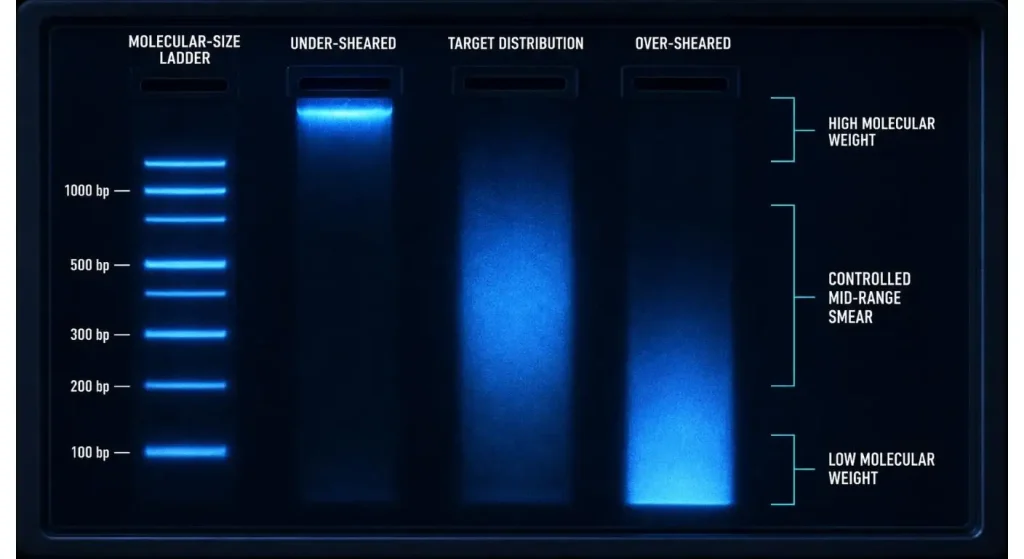
After shearing take a representative aliquot. Reverse the cross-links, clean up the DNA and assess the whole fragment size distribution with agarose gel electrophoresis or an appropriate automated fragment analyzer.
Don't evaluate untreated cross-linked chromatin as if it were purified DNA. The apparent size can be misleading due to a change in migration caused by proteins and cross-links.
Most of the material should be within the limits of the laboratory's "accepted" range with little or no large population of high molecular weight material. The amount of DNA recovered should also be measured as a good profile is not valuable if much of the DNA has been lost.
Why is there Inconsistent Chromatin Shearing?
These are due to variable fixation, inaccurate cell counts, incomplete lysis, variable sample volume, variable types of tubes and temperature drift.
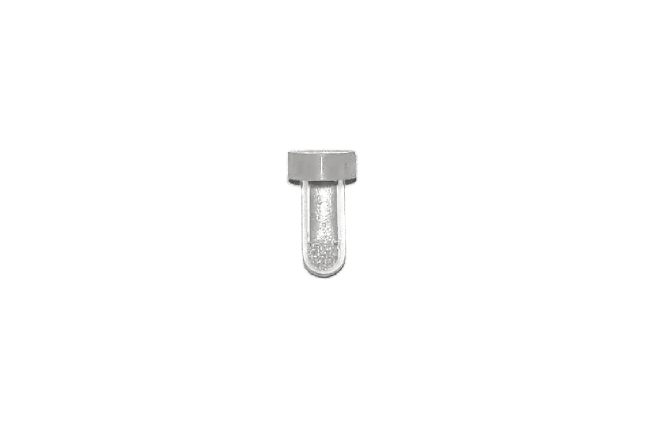
Foaming or air bubbles are an issue that can affect acoustic coupling. Therefore, sample tubes must be filled, capped and placed in the same manner. For method development, tubes from a validated type/validated lot are preferred.
If there is a variation between the results from a batch, this could indicate that there are sample position effects or sample preparation timing may have been inconsistent. A simple run log can be useful to see if there is any variation related to the biological, procedures or instruments.
How Should a New Sample Type Be Optimized?
Start with small fixation and acoustic matrix with material representative of real experiment. Don't use a valuable or non-replaceable specimen for the initial test.
| Test Condition | Low Setting | Middle Setting | High Setting |
| Fixation condition | 軽度 | 標準 | ストロング |
| Acoustic treatment | 短い | Intermediate | Long |
| Fragment profile | Record distribution | Record distribution | Record distribution |
| DNA recovery | Measure yield | Measure yield | Measure yield |
| ChIP enrichment | Test control target | Test control target | Test control target |
| Final decision | Under-sheared? | Acceptable? | Over-sheared? |
Assess fragment distribution and DNA recovery and immunoprecipitation performance. After shearing, chromatin suitability for ChIP can be evaluated using a positive-control antibody and known target loci.
Once optimized, set the critical parameters in an SOP. For more information about focused ultrasound for chromatin preparation, please see Longlight's ChIP application page.
結論
It's not only about the ultrasonic power to make reliable chromatin shearing. The various components of fixation, cell input, cell lysis, sample geometry, and acoustic and temperature conditions must all be compatible.
The optimal method yields the proper fragment distribution and maintains immunoprecipitation performance and recovery of material. Each lab is welcome to contact Longlight via the contact page to provide information about the type and batch of their sample and the ChIP workflow they would like to use, for equipment and application support.
FAQ
Q1. Why is there a need for chromatin shearing?
It breaks crosslinked chromatin to smaller pieces for IP. The use of fragments of controlled size will increase the resolution of ChIP-qPCR and ChIP-seq.
Q2. What would happen if chromatin is under sheared?
Very large pieces can cause a loss of resolution and an increase of nonspecific background. Consider re-evaluating fixation, lysis and acoustic conditions before automatically prolonging treatment.
Q3. Is it possible to over shear chromatin?
Yes. If too much treatment is used, recovery will be impaired or protein epitopes and DNA–protein complexes will be damaged. It is not always a good idea to use shorter fragments.
Q4. Does chromatin need to be kept on ice during the sonication?
Yes. The low-temperature processing is stable, which helps to reduce the damage to samples and proteins caused by heat. The temperature should be constant between samples and batches.
Q5. Is there a single chromatin-sheあるring program that is applicable to all cell types?
Usually not. The difference between cell structure, chromatin density, fixation response and sample concentration exists and new sample types should be subjected to limited optimization.
